

Overview.
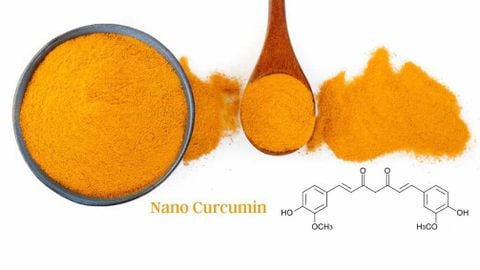
Turmeric (Curcuma longa) has been used in the food preparation of India and ethnic groups in Africa and Asia for thousands of years BCE. According to Oriental medicine, turmeric has the effect of healing wounds, treating inflammatory ulcers, stomachaches, detoxifying the liver, treating jaundice, promoting blood circulation, dissolving blood clots, helping uterine contraction after childbirth... In 1815, Vogel & Pelletier isolated the active ingredient of turmeric and named it Curcumin, accounting for 2-5% of turmeric. Nearly 100 years later, in 1910, Milobedzka and colleagues identified curcumin as a hydrophobic polyphenol with a diferuloylmethane structure. Commercial curcumin is a mixture consisting of 77% diferuloylmethane, 18% demethoxycurcumin, and 5% bisdemethoxycurcumin.
Many studies in recent decades have shown that polyphenols have many valuable biological effects such as antioxidant (anti-oxidant), anti-inflammatory, anti-bacterial, anti-fungal, anti-parasitic, and especially anti-cancer. Therefore, researchers have very quickly turned their attention to curcumin.
We can cite here the first authors who conducted experimental studies to prove the therapeutic effects of curcumin, which are anti-hyperglycemic effect (Srinivasan, M. 1972), anti-inflammatory effect (Srimal, R.C. 1973), antioxidant effect (Sharma, O.P. 1976), anti-rheumatic effect (Deodhar, S.D. 1980), hepatoprotective effect (Kiso, Y. 1983), anti-cancer effect (Kuttun. R. 1985), anti-thrombotic effect (Srivastava, R. 1995), myocardial infarction prevention effect (Dikshit, M. 1995), antibacterial effect (Jordan, W.C. 1996), nephroprotective effect (Venkatesan, N. 2000), anti-ulcer effect (Ronita De, 2009), etc.
Because curcumin has some disadvantages in bioavailability such as poor water solubility, difficult absorption, and easy elimination, scientists have produced curcumin in nano form, which is a particle form with a size of about 100 nanometers (1 nm = 1.10-9 m).
The first patent on nano curcumin was numbered EP 103266 A2 on May 30, 2001 (Ib-8), and the first research document on nano curcumin for medical purposes was published in 2005 [Li L et al.: Cancer 2005,104(6),1322-1331]. Since then, there has been an explosion of research and patents on nano curcumin: in 2005 there were 18 patents, and by 2010 the number had reached nearly 100. To evaluate the application potential of nano curcumin in the medical field, 254 related patents were analyzed, showing that 24% of patents relate to cancer treatment, followed by cardiovascular diseases at 13%, inflammatory conditions at 12%, diabetes at 11%, joint diseases at 10%, and digestive diseases at 9%, etc.
Analyzing the 24% of patents related to cancer alone, it was found that 16% were for breast cancer treatment, 10% for melanoma, 10% for prostate cancer, 10% for lung cancer, 9% for leukemia, etc.
Molecular targets of curcumin.
Recent studies have shown that in any given cancer, 300-500 normal genes have been mutated. Therefore, cancer is characterized by dysregulation of cellular information at many different steps, but most cancer chemotherapy drugs only act to modulate a single target (mono target), resulting in low efficacy. Many plant-derived active ingredients that act on multiple targets (multitarget), are not too expensive and are safer, have been and are attracting researchers, with curcumin at the top.
Curcumin is a highly pleiotropic molecule, having modulatory effects on numerous targets, including:
- Activating transcription factors such as NF-kB (Nuclear factor-kappa B), STAT3 (signal transducers and activators of transcription), PPAR-g (peroxisome proliferator-activated receptor-gamma), etc.
- Modulating kinases (EGFR, ERK, JAK), cytokines (TNF, IL, MIP), enzymes (MMP, iNOS, ATPase) and growth factors (EGF, NGF, HGF).
Thanks to these effects, curcumin has inhibited the proliferation and metastasis of cancer cells while inducing programmed cell death (apoptosis).
Anti-cancer potential of curcumin.
Numerous experimental and clinical studies over the past 2 decades have shown that curcumin has promising effects in the treatment and prevention of various cancers such as breast cancer, gastrointestinal cancer, liver and pancreatic cancer, colorectal cancer, genitourinary cancer, leukemia, etc.
Below is a brief overview of some major cancers.
Breast cancer
- Several studies have described the anti-breast cancer effect of curcumin on human cancer cell lines of hormone-dependent, hormone-independent types and on multidrug-resistant cells. Some proposed mechanisms of action of curcumin include: inhibition of aryl hydrocarbon receptor, inhibition of tyrosine kinase activity, COX-1, COX-2 enzymes, inhibition of vascular endothelial growth factor (VEGF), inhibition of basic fibroblast growth factor (b-FGF), etc.
- Some in vivo studies have found the preventive effect of curcumin against breast cancer. Intraperitoneal injection of curcumin at 100-200 mg/kg in female mice or feeding mice a diet of 8-16 g/kg curcumin/day significantly prevented breast cancer induced by 7,12-dimethylbenzanthracene (DMBA) compared to the control group of mice not receiving curcumin. Goel A. et al. (2007) also demonstrated the preventive effect of curcumin on breast cancer caused by gamma irradiation in rats. Many experimental studies on mice have also shown the effect of preventing lung metastasis of breast cancer: breast cancer cells were implanted into mice, and after 35 days, 100% of the mice showed lung metastases; whereas in the group fed a diet containing only 1% curcumin, 21% showed no metastases.
Stomach cancer
Feeding mice a diet containing 2-5% curcumin, or administering curcumin orally for 2 weeks before, during, and after inducing stomach cancer with benzopyrene, showed a very significant inhibitory effect on the carcinogenic action of benzopyrene. Aggarwal B.B. et al. (2007) demonstrated the experimental anti-duodenal cancer effect in mice and experimental stomach cancer effect in rats of curcumin.
Liver cancer
Numerous studies on human liver cancer cells have found that curcumin disrupts the cell cycle, exerts cytotoxic effects, fights proliferation, and induces programmed cell death (apoptosis). Combining curcumin with cisplatin or doxorubicin has a synergistic anti-tumor effect (Vietri M. et al. 2003; Chen Y.N. et al. 2003; Aggarwal B.B. 2007). Administering curcumin at 100-200 mcg/kg to mice for 20 consecutive days after subcutaneously implanting liver cancer cells showed that curcumin did not affect the growth of the tumor at the implantation site, but significantly inhibited metastasis to the liver (Aggarwal B.B. et al. 2003).
A small study on 12 patients with colorectal cancer metastasized to the liver who were given oral curcumin at 450-3600 mg/day for 1 week before surgery found that the concentration of curcumin in liver tissue was not sufficient to cause pharmacological effects. It is possible that curcumin was heavily metabolized in the intestine (Aggarwal B.B. et al. 2007) and thus failed to reach the liver.
Pancreatic cancer
Many studies show that curcumin has anti-tumor effects against multiple human pancreatic cancer cell lines through various mechanisms, such as inhibiting farnesyl protein transferase NF-kB, IL8, COX-2, EGFR, etc. (Wang W. 1999; Khanbolooki S. 2006; Kamohara H. 2007).
Other types of cancer
Numerous in vitro and in vivo experimental studies on various cell lines of intestinal cancer, genitourinary cancer (bladder, kidney, prostate, ovary, uterus), lung cancer, leukemia, etc., have been published, all demonstrating the anti-cancer effects of curcumin through various mechanisms as seen with the aforementioned cancers.
In summary, the anti-cancer effect of curcumin is due to the inhibition of tumor cell proliferation and metastasis through the regulation of various translation factors, growth factors, inflammatory cytokines, protein kinases, and several other enzymes. In addition, curcumin also induces programmed cell death.
The effect of curcumin in reducing cancer symptoms
Cancer patients suffer from many symptoms related to the disease itself and to treatments (chemotherapy-radiotherapy) such as neuropathic pain, depression, fatigue, loss of appetite, and insomnia. All of these symptoms are related to pro-inflammatory factors such as NF-kB, TNF, IL-1, IL-6 (Cleeland C.S. 2003; Chen H.W. 2004). Curcumin inhibits the activity of these factors and can thus combat symptoms caused by cancer and chemo-radiotherapy. Many experimental studies on animals have confirmed this (Sharma S. 2006; Xu X. 2005; Maes M. 2007; Davis J.M. 2007).
Human application of curcumin – Nano curcumin
In current world medical literature, curcumin has been almost considered an amazing molecule among natural compounds with anti-cancer effects. After nearly 20 years of experimental research, the anti-cancer effect of curcumin has been confirmed. Many exploratory clinical trials on patients have also shown promising potential of curcumin in cancer treatment. However, the biggest obstacle when applied to humans is that curcumin is very poorly soluble in water (maximum solubility concentration is 0.0004 mg/mL at pH 7.3), leading to very low bioavailability (some clinical trials where human volunteers took up to 12g/day of curcumin showed blood curcumin levels reaching only ≤ 130 nM – Vareed S.K. 2008). Furthermore, curcumin is rapidly metabolized in the liver and eliminated via feces. To overcome this obstacle, many measures have been proposed and tested, such as adding the adjuvant piperine to reduce the degradation of curcumin in the intestine; using liposomal curcumin; using phospholipid complex forms; forming metal chelate complexes; producing curcumin in the form of nano particles with sizes ranging from 10 to 200 nm (1 nm = 10-9 m). Among the above measures, nanocurcumin is rated as the most effective.
- Yin-Meng Tsai (2011) studied and compared the kinetics of regular curcumin and nanocurcumin in rats, showing that the concentrations of the nano form in the liver, spleen, lungs, and kidneys were all higher than those of regular curcumin. The area under the curve (AUC), half-life, and retention time of nanocurcumin in tissues all increased. Nanocurcumin crossed the blood-brain barrier and accumulated heavily in the hippocampus and cerebral cortex.
- Murali M.Y. et al. (2013) evaluated the therapeutic efficacy in vitro and in vivo of nanocurcumin on human pancreatic cancer cells showed that nanocurcumin inhibited cancer cell proliferation and colony formation, inhibited xenograft tumor growth in mice, and prolonged mouse survival time, with no signs of nanocurcumin toxicity observed. The bioavailability of the nano form exceeded that of regular curcumin by 2.5 times.
- In the treatment of ovarian cancer, platinum derivatives (cisplatin, carboplatin) and taxanes are commonly used, but toxicity is often high and drug resistance is frequent. A strategy to improve efficacy and limit the toxicity of cisplatin as well as irradiation is to use natural active ingredients from medicinal herbs such as quercetin, xanthorrhizol, ginger, green tea, turmeric, etc. Among them, turmeric polyphenol (curcumin) is of particular interest because it has preventive and therapeutic activities through multiple proven mechanisms and is non-toxic at doses up to 12 g/day. Murali M.T. (2010) found that cisplatin-resistant ovarian cancer cells, when pre-treated with curcumin, exhibited increased sensitivity to cisplatin, requiring a cisplatin dose 10 times lower than treatment with cisplatin alone.
- Francesca Milano (2013) observed that nanocurcumin penetrated both healthy cell lines and esophageal squamous cell carcinoma cell lines, yet it only strongly inhibited the proliferation of the diseased cell line, demonstrating the specific action of nanocurcumin on cancer. Additionally, it enhanced the immune response via T lymphocytes.
The Role of Curcumin as a Preventive Drug to Prevent Cancer
With experiments on cancer cell lines, treatments of experimental cancers in animals, and exploratory treatments in patients with certain cancers over the past 20 years, researchers worldwide have drawn the following conclusions:
- Curcumin has preventive and therapeutic effects on various types of cancer through multiple molecular targets: reducing and inhibiting the activity of the nuclear factor NF-kB, inducing apoptosis, reducing cancer cell proliferation, metastasis, and invasion, and reducing angiogenesis to suppress tumor growth.
- Curcumin increases the sensitivity of cancer cells to chemotherapy/radiotherapy, so when combined, it reduces the chemotherapy/radiotherapy dose and drug toxicity.
- Curcumin reduces certain pro-inflammatory cytokines such as TNFa, IL-1, IL-2, IL-8, and IL-12, thereby alleviating cancer symptoms as well as side effects of chemotherapy/radiotherapy, such as neuropathic pain, depression, fatigue, insomnia, and loss of appetite.
- Curcumin is well tolerated; oral doses up to 12g or even 20g/day show no signs of toxicity. Patients only find it difficult to take due to unpleasant taste and nausea.
- Besides these primary advantages, a major obstacle limiting the therapeutic efficacy of curcumin is its poor water solubility, leading to poor absorption and low bioavailability. Many methods have been implemented to overcome this drawback, among which producing curcumin in nano form is receiving the most attention. Nanocurcumin has a bioavailability in rats and humans 30 times higher than curcumin. Nanocurcumin penetrates cells and has a specific action in suppressing cancer cells. The nano form, with a size of 2-4 nm, can also penetrate bacterial and fungal cells, disrupting cell membranes.
Nanocurcumin is a natural active ingredient with great promise to become a cancer prevention and treatment drug in the coming years.
Reference links:
https://onlinelibrary.wiley.com/doi/full/10.1111/os.12183
https://jnanobiotechnology.biomedcentral.com/articles/10.1186/1477-3155-5-3
https://www.ingentaconnect.com/content/ben/cpd/2002/00000008/00000019/art00003
https://link.springer.com/article/10.1186/1747-1028-3-14
https://synapse.koreamed.org/articles/1036407
https://www.tandfonline.com/doi/abs/10.1080/13813450802033958
https://www.hindawi.com/journals/bmri/2014/761608/

Article source: adongnguyen.blogspot.com