

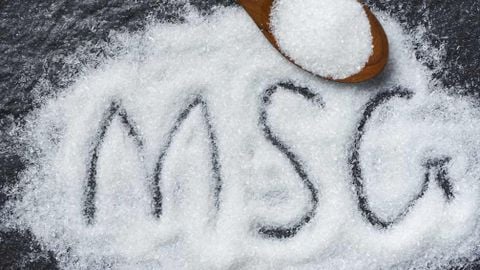
Consumers usually have the habit of looking at prices and brands when shopping for consumer goods rather than having the habit of reading ingredient labels carefully or finding out whether the substances declared by the manufacturer in the product ingredients are harmful or not in order to know, and if used, to use them in moderation.
The following article by LeKhaMart is shared to help consumers better understand ingredient indices such as additives, sweeteners, flavor enhancers... and whether they are good for consumer health.
Please allow me to use fish sauce as an example to share. This article is neutral and does not target any brand to tear down or praise. This is knowledge - experience - and practice to help readers clearly understand how to choose products that meet their family's needs, as well as have a more suitable diet.

Main ingredient (95%): Anchovy fish sauce. Minor ingredients: Sugar, flavor enhancers (627, 631), sweetener (960a)
How to read and understand the above label?
Main ingredient: 95% Anchovy fish sauce, which means equivalently that in 1 liter or 1kg of finished fish sauce, 950g (0.95 liters) is bottled by the manufacturer who bought fish sauce from vats and brought it back to blend with another 50g of additives (minor ingredients).
Minor ingredients:
Flavor enhancer 627 (Disodium guanylate) is the disodium salt of guanylic acid. Guanylate may not be used in products for children under 12 weeks of age. Asthma sufferers should avoid guanylic acid and guanylate. People with gout need to avoid using guanylate as it can metabolize into purine. They are also not suitable for vegetarians.
Flavor enhancer 627 is the MSG component, combined with Flavor enhancer 631 to create the Umami taste (see more in the conclusion).
Flavor enhancer 631 (Disodium inosinate) is the disodium salt of inosinic acid.
Inosinic acid, also known as IMP, is an important nucleoside in metabolism. It is an acid found naturally in many animals, and commercially it is produced by fermenting molasses, starch, sugar beets, and sugar cane using yeast or bacteria such as Brevibacterium, Arthrobacter, Microbacterium, and Corynebacterium. It can also be produced from meat or fish (sardines). Used in antacids, pain relievers, cough syrups, protein drinks, supplements, and as a sweetener in breads. Inosinate may not be used in products for children under 12 weeks of age. Asthma sufferers should avoid inosinate. Because inosinate metabolizes into purine, people with gout should avoid it. Therefore, it is not suitable for vegetarians, and in many cases unsuitable for Jews, Muslims, and Hindus.
Sweetener 960a (steviol glycoside): mainly stevioside and rebaudioside, with a sweetness 250–300 times that of cane sugar, this sweetener is not pyrolyzed, has a stable pH, and is non-fermentable, meaning it is not used by bacteria or yeasts.
Conclusion: The purpose of these minor ingredients added by the manufacturer is to enhance the flavor of the product to create the Umami taste, the taste of MSG, which is one of the 5 basic tastes alongside sweet, sour, salty, and bitter. Umami means "the essence of deliciousness" in Japanese. This taste is often described as savory, meaty. That is the reason why you find fish sauce delicious (your taste buds are tricked). Sweetener 960a also helps reduce the saltiness of fish sauce and acts as a preservative that inhibits the production of bacteria and fungi, increasing shelf life.
If a product lists E631 and E627 and the business claims it is safer than MSG, the business is lying to customers because it is itself a form of super-sweet flavor enhancer.

This abalone-infused tuna fish sauce consists of:
Main ingredient (90%): Anchovy fish sauce extract, water, salt. This means the main ingredients are tap water + flavored fish sauce extract + salt. The reason water + salt is present here is because pure anchovy fish sauce is very scarce. Imagine what water mixed with salt would taste like, so a bit of pure fish sauce needs to be added to create the natural color and flavor of fish sauce.
Other ingredients (10%): Flavor enhancers (640, 621, 639, 620, 627, 631), sugar, synthetic flavoring, natural colorings (150a, 162), yeast extract, amino acid blend, stabilizer (415), synthetic sweetener (950), gardenia fruit extract, acidity regulator (330), tuna extract (100mg/kg), abalone extract powder (100mg/kg). We do not know whether these substances are harmful or not, but looking at a product with so many additives like this, do you find your mouth watering yet?
Please check the table at the end of the article for more understanding

Fish sauce ingredients include: Pure anchovy fish sauce (98%), salt, water, flavor enhancers (E635, E640), synthetic sweetener (E950)

Ingredients: Shrimp fish sauce 40% (shrimp, salt), water, salt, sugar, synthetic sweetener (955), flavor enhancers (621, 635, 639, 640), acidity regulator (330), stabilizer (415), preservative (202), natural colors (120, 150a, gardenia fruit extract color), synthetic fish sauce flavor.
Let's find out what the flavor enhancers, preservatives, and additives mentioned above are and whether they have any health benefits:
- Flavor enhancer 640: Glycine (C2H5NO2) is an amino acid with the following uses: - Creates a delicious flavor, creates an umami taste for meat and seafood products. - Reduces other tastes such as bitterness, sourness, saltiness, giving the product a mild sweet taste. - Gives the product a brownish-yellow color, creating a caramel aroma. - Acts as a protein-boosting substance for fish sauce, soy sauce, vegetarian fish sauce, sauces, and other seasoning packets.
- Flavor enhancer 621: (monosodium glutamate) according to Decision No. 3742/2001 dated August 31, 2001 of the Ministry of Health, the flavor enhancer numbered 621 is MSG.
- Flavor enhancer 639: is a sweet-tasting amino acid. DL Alanine has the effect of enhancing the UMAMI sweetness, reducing harsh and unpleasant aftertastes, balancing sourness.
- Flavor enhancer 620: Glutamic acid is an essential natural amino acid found in all complete proteins. It is the most common neurotransmitter stimulant in the brain. Glutamic acid has the ability to turn bland and tasteless food into exceptionally delicious food.
- Flavor enhancer 627: disodium 5-guanylate
- Flavor enhancer 631: disodium 5-inosinate
- Flavor enhancer E635: Disodium 5-ribonucleotide is a compound produced from the sodium salts of guanylic acid (E627) and disodium inosinate (E631)
- Flavor enhancer E640: is an amino acid with a pleasant sweet taste. In nature, Glycine is commonly found in shrimp and crab meat. When Glycine is added, it masks the unpleasant salty, sour, and bitter tastes of the dish.
- Sweetener E950: Acesulfame Potassium (INS 950) is also one of the widely used sweeteners worldwide. Acesulfame Potassium is non-synthetic and calorie-free, so the body absorbs it directly and excretes it through urine.
- Sweetener 960a:
- Among them, 960a designates the steviol glycoside sweetener, and 960b designates the Rebaudioside A sweetener.
- Steviol glycoside (960a) and Rebaudioside A (960b) are two types of extracts from the sweet plant approved by the US Food and Drug Administration (FDA), the World Health Organization (WHO), and also accepted by the European Food Safety Authority, so consumers can feel secure using products containing either of these two types of sweeteners.
- However, one note is that according to the US Food and Drug Administration - FDA, the use of stevia leaves or "crude stevia extracts" as food additives is not approved. Studies on these forms of stevia have raised concerns about blood sugar control, alongside impacts related to reproductive, cardiovascular, and kidney functions – the FDA warns.
- Stabilizer 415: Thickener E415 (Xanthan gum) belongs to the group of stabilizers, which are corn sugar polysaccharides fermented by a strain of bacteria called Xanthomonas campestris, purified by recovery with ethanol or isopropanol, dried, and milled. Thickener E415 contains D-glucose and D-mannose as the predominant hexose units, along with D-glucuronic acid and pyruvic acid, and is treated as Na, K, or Ca salts; solutions of xanthan gum are neutral.
Purpose of using thickener E415
- – Xanthan gum thickener is a thickening agent that increases the viscosity of food
- – Xanthan gum also acts as an anti-settling agent
- – Thickener E415 can be combined with natural gums, used to form gels resistant to acidic ingredients
- – Xanthan gum has water-retaining properties, prevents clumping during dough kneading, and improves dough uniformity
- – In addition to food applications, stabilizer E415 is also used in cosmetics (creams, shampoos), pharmaceuticals, and the oil and gas industry,
- Preservative 202:
- Preservative E202 (Potassium Sorbate – Potassium Sorbate) is the potassium salt of sorbic acid. Sorbic acid occurs naturally in some berries, from which potassium sorbate is derived.
- – Chemical name: Potassium sorbate; Potassium salt of trans, trans-2,4-hexadienoic acid
- – Potassium Sorbate has a strong inhibitory effect on yeasts and molds but has little effect on bacteria. The preservative activity of Potassium Sorbate depends on the pH of the product.
- – Potassium sorbate is an important commercial substance used as a preservative and antimicrobial in food, wine, and cosmetics.
- Food can be soaked, sprayed onto the food surface, or mixed with food ingredients during processing. Depending on the specific case, it can be used in dissolved form or as crystalline granules.
- Natural color 120: Carmine Red (also known as Cochineal) is a natural bright red color extracted from an insect cultivated mainly in South America. Carmine is the aluminum or calcium-aluminum lake, or aluminum hydroxide of the main coloring principle obtained by aqueous extraction of cochineal. Cochineal extract is the concentrated solution obtained after removing alcohol from an aqueous alcoholic extract of cochineal (Dactylopius coccus costa (Coccus acti L.)); the main coloring component is carminic acid.
- Natural color 150a: Used for coloring in foods: confectionery, beverages, syrups, shredded dried pork (chà bông), processed meat and fish, dipping sauces, ketchup, chili sauce..., coloring in cosmetics, coloring in pharmaceuticals and animal feed.
Most additives currently imported are mainly manufactured in China.
Complete list of Flavor Enhancers from Wikipedia European (by E number):
CodeNameDescriptionHazard level
E620
Glutamic acid
Glutamic acid is a naturally occurring essential amino acid found in all complete proteins. It is the most common neurotransmitter exciter in the brain. Glutamic acid has the ability to turn bland and tasteless food into food with a delicious taste. It is very cheap and easy to produce, and is present in many foods. Commercially, it is produced by microbial fermentation of sugarcane molasses and is also produced from vegetable protein. Glutamate salts may not be used in products for children under 12 weeks of age. These products are gluten-free.
Avoid
E621
Monosodium glutamate, MSG
Monosodium glutamate is the sodium salt of glutamic acid. Glutamate may not be used in products for children under 12 weeks of age. Some people experience allergies when consuming large amounts of MSG. Symptoms include headache, nausea, weakness and a burning sensation at the back of the neck and arms, wheezing, heart rate changes, and difficulty breathing. Gluten-free products.
Avoid
E622
Monopotassium glutamate
Monopotassium glutamate is the potassium acid salt of glutamic acid. It is a sodium-free MSG (E621) alternative. Glutamate may not be used in products for children under 12 weeks of age. Gluten-free products.
Avoid
E623
Calcium diglutamate
Calcium diglutamate is the calcium acid salt of glutamic acid. Glutamate may not be used in products for children under 12 weeks of age. Gluten-free products.
Avoid
E624
Ammonium glutamate
Ammonium glutamate is the ammonium acid salt of glutamic acid. Glutamate may not be used in products for children under 12 weeks of age. Gluten-free products.
Avoid
E625
Magnesium diglutamate
Magnesium diglutamate is the magnesium acid salt of glutamic acid. Glutamate may not be used in products for children under 12 weeks of age. Gluten-free products.
Avoid
E626
Guanylic acid
Guanylic acid, also known as GMP, is a nucleotide consisting of guanine, a ribose sugar, and a phosphate group formed during protein synthesis. It is an ester of phosphoric acid with the nucleoside guanosine. Commercially, it is produced from dried fish, yeast extract, or dried seaweed. Guanylate salts may not be used in products for children under 12 weeks of age. Asthmatics should avoid guanylic acid and guanylate. People with gout must avoid using guanylate as it can metabolize into purines. They are also not suitable for vegetarians.
Avoid
E627
Disodium guanylate
Disodium guanylate is the disodium salt of guanylic acid. Guanylate may not be used in products for children under 12 weeks of age. Asthmatics should avoid guanylic acid and guanylate. People with gout must avoid using guanylate as it can metabolize into purines. They are also not suitable for vegetarians.
Avoid
E628
Dipotassium guanylate
Dipotassium guanylate is the potassium salt of guanylic acid. Guanylate may not be used in products for children under 12 weeks of age. Asthmatics should avoid guanylic acid and guanylate. People with gout must avoid using guanylate as it can metabolize into purines. They are also not suitable for vegetarians.
Avoid
E629
Calcium guanylate
Calcium guanylate is the calcium salt of guanylic acid. Guanylate may not be used in products for children under 12 weeks of age. Asthmatics should avoid guanylic acid and guanylate. People with gout must avoid using guanylate as it can metabolize into purines. They are also not suitable for vegetarians.
Avoid
E630
Inosinic acid, IMP, hypoxanthine ribotide
Inosinic acid, also known as IMP, is an important nucleoside in metabolism. It is an acid found naturally in many animals, while commercially it is produced by fermentation of molasses, starch, sugar beet, and sugarcane using yeast or bacteria such as Brevibacterium, Arthrobacter, Microbacterium and Corynebacterium. It can also be produced from meat or fish (sardines). Used in antacids, pain relievers, cough syrups, protein drinks, supplements, and as a sweetener in breads. Inosinate may not be used in products for children under 12 weeks of age. Asthmatics should avoid inosinate. Because inosinate is metabolized into purines, people with gout should avoid it. Therefore, it is not suitable for vegetarians, and in many cases unsuitable for Jews, Muslims, and Hindus.
Undetermined
E631
Disodium inosinate
Disodium inosinate is the disodium salt of inosinic acid. See E630 for more details.
Undetermined
E632
Dipotassium inosinate
Dipotassium inosinate is the potassium salt of inosinic acid. See E630 for more details.
Undetermined
E633
Calcium inosinate
Calcium inosinate is the calcium salt of inosinic acid. See E630 for more details.
Undetermined
E634
Calcium 5′-ribonucleotides
Calcium 5'-ribonucleotide is a compound produced from the calcium salts of guanylic acid (E626) and inosinic acid (E630). It forms a white, odorless powder or crystals with a very characteristic flavor, used as a flavor enhancer in food. See E626 and E630 for more details.
Undetermined
E635
Disodium 5′-ribonucleotides
Disodium 5'-ribonucleotide is a compound produced from the sodium salts of guanylic acid (E627) and disodium inosinate (E631). See E627 and E631 for more details.
Undetermined
E636
Maltol
Maltol is a natural organic compound found in pine bark, pine needles, and dried malt. In production, it is extracted from pine trees, or from dried malt, or produced by heating lactose and maltose. It is used as a flavor enhancer in food, especially in breads and pastries. Acceptable Daily Intake (ADI): Up to 1 mg/kg of body weight. Sometimes uses lactose (from cow's milk). Therefore, vegetarians should avoid it. It is lactose-free and can be used by people with lactose intolerance.
Undetermined
E637
Ethyl maltol
Ethyl maltol is derived from maltol (E636) by replacing a metholyl group with an ethyl group. Acceptable Daily Intake (ADI): Up to 2 mg/kg of body weight. Sometimes uses lactose (from cow's milk). Therefore, vegetarians should avoid it. It is lactose-free and can be used by people with lactose intolerance.
Undetermined
E640
Glycine and its sodium salt
Glycine is an amino acid. In manufacturing, it can be produced in two different ways: by treating chloroacetic acid with ammonia, or by Strecker amino acid synthesis. Glycine is used as a sweetener, flavor enhancer, and a bulking agent in food. Glycine is produced mainly from gelatin, which is derived from animal bones. Therefore, it is unsuitable for vegetarians and in many cases unsuitable for Jews, Muslims, and Hindus.
Undetermined
E641
Leucine
Leucine is an essential amino acid that helps synthesize protein. It is used as a supplement because it helps slow down the degradation of muscle tissues by enhancing muscle protein synthesis. It is also used as a flavor enhancer. Used in bodybuilding supplements and in medications.
Undetermined
E642
Lysine hydrochloride
Lysine hydrochloride is an essential amino acid that helps with the growth and repair of body tissues. It is in powder form and is used as a flavor enhancer in food and as an amino acid supplement.
Undetermined
E650
Zinc acetate
Zinc acetate is a chemical compound produced by the chemical reaction of acetic acid and zinc carbonate. This reaction produces a colorless solid used in supplements. It is also used in lozenges to help treat the common cold and help treat people with zinc deficiency. It is also used in chewing gum, lozenges, breath fresheners, supplements, and in bodybuilding formulas.
Undetermined
To establish quality testing criteria for dipping sauces, we need to base them on:
- QCVN 8-1:2011/BYTNational technical regulation on limits for mycotoxin contamination in food
- QCVN 8-2:2011/BYT National technical regulation on limits for heavy metal contamination in food.
Dipping sauce quality testing criteria: However, fish sauce manufacturers rarely test all the criteria below and disclose them to consumers.
No.
CRITERIA
TEST METHOD
ORGANOLEPTIC AND PHYSICAL-CHEMICAL
1
State
Organoleptic
2
Odor
Organoleptic
3
Taste
Organoleptic
4
Color
Organoleptic
5
Impurities visible to the naked eye
Organoleptic
MAIN QUALITY CRITERIA
6
Acidity (calculated as acetic acid) (*)
TCVN 3702:2009
7
Carbohydrate(*)
TCVN 4594:1988
8
Salt (NaCl)(*)
TCVN 3701:2009
9
Protein(*)
TCVN 3705:1990
10
Ammoniacal nitrogen(*)
TCVN 3706:1990
11
Amino acid nitrogen(*)
TCVN 3708:1990
12
Formol nitrogen(*)
TCVN 3707:1990
13
Dry matter content(*)
FAO, 14/7, 1986
14
Fat(*)
FAO, 14/7, 1986
15
Amino nitrogen(*)
TCVN 3707:1990
16
Urea
TK. Appilication Note SSI – AP – LCMS 0277 – Shimadzu (LCMSMS)
17
Histamine
TK. EZ : faast (LCMSMS)
18
Amino acid
TK.EZ : faast (LCMSMS)
NITRITE AND NITRATE RESIDUES
19
Nitrite (NO2-)(*)
TK.TCVN 7767:2007
20
Nitrate (NO3-)(*)
TK.TCVN 7767:2007
HEAVY METALS
21
Arsenic (As)(*)
AOAC 986.15 (2011)
22
Mercury (Hg) (*)
AOAC 974.14 (2011)
23
Cadmium (Cd) (*)
AOAC 999.11 (2011)
24
Lead (Pb) (*)
AOAC 999.11 (2011)
MYCOTOXINS
25
Ochratoxin A
TK. AOAC 2000.03(LC/MS/MS)
26
Total Aflatoxin
TK.AOAC 991.31 (LC/MS/MS)
27
Aflatoxin/substance (B1, B2, G1, G2)
TK.AOAC 991.31(LC/MS/MS)
28
Aflatoxin M1
TK. AOAC 986.16:2002 (HPLC-UV
29
Deoxynivalenol (DON)
TK.AOAC 986.18 (LC/MS/MS)
30
Total aerobic bacterial count *
TCVN 4884:2005(ISO 4833:2003)
31
Coliforms* (CFU)
AOAC 991.14 (3M Petrifilm)
32
E.coli *(MPN)
TCVN 6846:2007ISO 7251:2005
33
Staphylococcus aureus*
AOAC 2003.11 (3M Petrifilm)
34
Clostridium perfringens*
TCVN 4991:2005ISO 7937:2004
35
Salmonella spp *
TCVN 4829:2005ISO 6579:2004
36
V. parahaemolyticus*
TCVN 7905-1:2008ISO 21872 -1:2007
MICROBIOLOGY – Plant-based dipping sauces
37
Total aerobic bacterial count *
TCVN 4884:2005(ISO 4833:2003)
38
Coliforms* (CFU)
AOAC 991.14 (3M Petrifilm)
39
E.coli *(MPN)
TCVN 6846:2007ISO 7251:2005
40
Staphylococcus aureus*
AOAC 2003.11 (3M Petrifilm)
41
Clostridium perfringens*
TCVN 4991:2005ISO 7937:2004
42
Yeasts and Molds*
TCVN 8275-1:2010ISO 21527-1:2008 (liquid form)
43
Salmonella spp *
TCVN 4829:2005ISO 6579:2004
Above are the basic parameters for animal-derived dipping sauces and plant-derived dipping sauces. Depending on the origin or specific characteristics of the product, businesses can add or reduce certain parameters to suit the testing purpose.
If you want to learn more about the products, please join the LeKhaMart Community click here