



| Custard Apple Nutrition Facts |
|
||||||
|
|
100 g | ||||||
| Calories (kcal) | 93 | ||||||
| Lipid | 0.3 g | ||||||
| Saturated fat | 0 g | ||||||
| Cholesterol | 0 mg | ||||||
| Sodium | 9 mg | ||||||
| Potassium | 247 mg | ||||||
| Carbohydrate | 24 g | ||||||
| Fiber | 4.4 g | ||||||
| Protein | 2.1 g | ||||||
| Vitamin C | 36.3 mg | Calcium | 24 mg | ||||
| Iron | 0.6 mg | Vitamin B6 | 0.2 mg | ||||
| Vitamin B12 | 0 µg | Magnesium | 21 mg | ||||
8 Surprising Benefits of Custard Apple
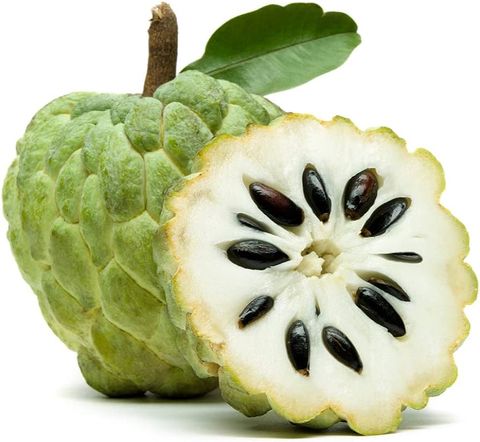
Custard apple (Annona cherimola) is a green, cone-shaped fruit with leathery skin and creamy, sweet flesh. Believed to have originated in the Andes mountains of South America, it is grown in high-altitude tropical regions. Due to its creamy texture, custard apple is also known as sweetsop. Often eaten with a spoon and served chilled like custard, it has a sweet flavor similar to other tropical fruits like bananas and pineapples. Very rich in fiber, vitamins, and minerals, this unique fruit may support immunity, reduce inflammation, and promote eye and heart health. However, some parts of the custard apple contain toxins that can harm the nervous system if consumed in large amounts. Below are 8 surprising benefits of custard apple.
1. High in antioxidants
Custard apple is rich in antioxidants, which help fight free radicals in the body. High levels of free radicals can cause oxidative stress, linked to many chronic diseases, including cancer and heart disease. Several compounds in custard apple, including kaurenoic acid, flavonoids, carotenoids, and vitamin C, have powerful antioxidant effects. A test-tube study showed that both the peel and the flesh are excellent sources of antioxidants, with compounds in the peel being particularly effective at preventing oxidative damage. However, note that you should not eat the custard apple peel due to health concerns, as explained in more detail below. The carotenoid antioxidants in custard apple, like lutein, can be very powerful. Research shows that carotenoid-rich foods can promote eye health and reduce the risk of heart disease and certain types of cancer.
2. May boost your mood
Custard apple is an excellent source of vitamin B6 (pyridoxine). In fact, 1 cup (160 grams) of the fruit contains 24% of the Reference Daily Intake (RDI). Vitamin B6 plays an important role in creating neurotransmitters, including serotonin and dopamine, which help maintain your mood. Inadequate levels of this vitamin can contribute to psychological disorders. In fact, low levels of vitamin B6 are linked to depression, especially in the elderly. A study in older adults showed that vitamin B6 deficiency doubled the likelihood of depression. By boosting levels of this important vitamin, eating foods like custard apple can help reduce the risk of depression associated with vitamin B6 deficiency.
3. May benefit eye health
Custard apple is rich in the carotenoid antioxidant lutein, one of the main antioxidants in the eye that helps maintain healthy vision by fighting free radicals. Many studies link high lutein intake with good eye health and a lower risk of age-related macular degeneration (AMD), a condition characterized by eye damage and vision loss. Lutein may also protect against other eye problems — including cataracts, a condition that causes clouded vision and vision loss. A review of 8 studies found that people with the highest blood levels of lutein had a 27% lower risk of cataracts compared to those with the lowest levels. Therefore, consuming foods rich in lutein — like custard apple — can support eye health and reduce the risk of conditions like AMD and cataracts.
4. May prevent high blood pressure
Custard apple is rich in nutrients that help maintain blood pressure, such as potassium and magnesium. Notably, 1 cup (160 grams) of the fruit provides 10% of the Reference Daily Intake (RDI) for potassium and over 6% of the RDI for magnesium. Both potassium and magnesium encourage blood vessel dilation, which in turn helps lower blood pressure. High blood pressure can increase the risk of heart disease and stroke. One review noted that consuming the recommended daily dose of potassium — 4,700 mg per day — can reduce systolic and diastolic blood pressure by about 8 and 4 mm Hg, respectively. Another review showed an inverse relationship between magnesium intake and the risk of high blood pressure, when comparing people with the highest magnesium intake to those with the lowest. Each additional 100 mg of magnesium per day is associated with a 5% reduced risk of high blood pressure.
5. May promote good digestion
One cup (160 grams) of custard apple provides nearly 5 grams of fiber, accounting for over 17% of the RDI. Because fiber cannot be digested or absorbed, it adds bulk to stool and helps move it through your gut. In addition, soluble fiber — like those found in custard apple — can feed beneficial bacteria in the gut and undergo fermentation to produce short-chain fatty acids (SCFAs). These acids include butyrate, acetate, and propionate. SCFAs are a source of energy for your body and can protect against inflammatory conditions affecting the gut, such as Crohn's disease and ulcerative colitis. By supporting healthy bowel movements and nourishing gut bacteria, custard apple and other fiber-rich foods can promote optimal digestive health.
6. May have anticancer properties
Some compounds in custard apple may help fight cancer. Custard apple contains flavonoids including catechin, epicatechin, and epigallocatechin, which have been shown in test-tube studies to inhibit cancer cell growth. One study found that treating bladder cancer cells with epicatechin led to a sharp decrease in cell growth and replication compared to cells not receiving this flavonoid. Another test-tube study observed that certain catechins — including those in custard apple — stopped up to 100% of breast cancer cell growth. Furthermore, population studies show that people consuming a flavonoid-rich diet have a lower risk of certain cancers like stomach and colon cancer compared to those with diets low in these compounds. However, more human studies are needed to better understand how compounds in custard apple and other fruits affect cancer.
7. May fight inflammation
Chronic inflammation is linked to an increased risk of many diseases, including heart disease and cancer. Notably, custard apple provides many anti-inflammatory compounds, including kaurenoic acid. This acid has powerful anti-inflammatory effects and has been shown to reduce levels of specific inflammatory proteins in animal studies. In addition, custard apple contains catechin and epicatechin, flavonoid antioxidants shown to have strong anti-inflammatory effects in test-tube and animal studies. One study observed that mice fed a diet rich in epicatechin had a sharp reduction in blood C-reactive protein (CRP) levels compared to the control group. High CRP levels are linked to hardening and constriction of arteries, significantly increasing the risk of heart disease.
8. May support the immune system
Like other tropical fruits, custard apple is rich in vitamin C, a nutrient that supports the immune system in fighting infections and diseases.
Vitamin C deficiency is linked to impaired immunity and an increased risk of infections. Human studies also show that vitamin C can help reduce the duration of colds. However, research varies and mainly focuses on supplementation rather than dietary vitamin C. Consuming custard apple and other vitamin C-rich foods is an easy way to ensure adequate immune health.
Side effects of custard apple
Although custard apple offers incredible health benefits, it still contains small amounts of toxic compounds. Custard apple and other fruits in the Annona family contain annonacin, a toxin that can affect your brain and nervous system. In fact, observational studies in tropical regions link high consumption of Annona fruits to an increased risk of a specific type of Parkinson's disease that does not respond to conventional medications. All parts of the custard apple tree can contain annonacin, but it is most concentrated in the seeds and skin. To enjoy custard apple and minimize exposure to annonacin, remove and discard the seeds and skin before eating. If you are particularly concerned about annonacin or have Parkinson's disease or another nervous system condition, it may be best to avoid eating custard apple.
Source: translated from healthline.com