BLUE HILLS MANUKA HONEY
Manuka honey is made by bees that collect nectar from Leptospermum flowers (also known as the manuka tree), a plant native to Southeastern Australia and New Zealand. It is highly valued compared to other ordinary honeys due to its antibacterial and wound-healing properties. This is the honey that indigenous Australians and the Maori people have used for thousands of years.
In 2006, the natural antibacterial compound, Methylglyoxal, was found in Manuka honey, serving as the strongest scientific proof confirming the miraculous benefits of this rare honey.
The quality of Manuka honey is evaluated by the Methylglyoxal content present in the honey; the higher this index is, the better the antibacterial and healing capabilities of the honey.
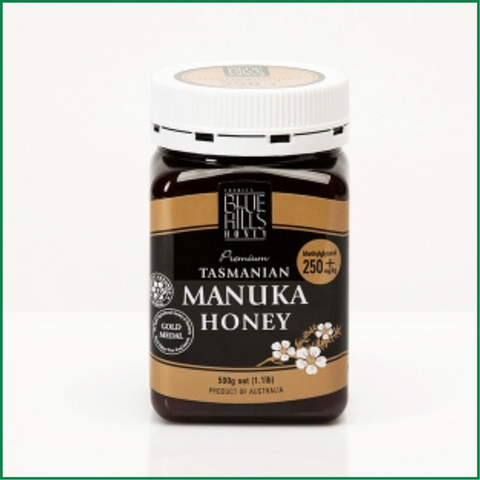
The MGO rating on the label indicates the amount of methylglyoxal in the honey: Manuka Blue Hills 400+ has at least 400mg of methylglyoxal in each kg of Manuka honey. Typically, Manuka honey with an MGO index of 250+ is sufficient to meet health care and beauty needs.
.jpg)
Ingredients:
100% Pure Manuka Honey
- Antibacterial Index MGO 400+
- MGO™ 400+ Manuka Honey – means that in 1 kg of honey there is 400mg of Methylglyoxal
Uses
- Supports the treatment of stomach ulcers and very effectively treats acid reflux symptoms
- Supports the treatment of sore throat and respiratory infections
- Improves sleep and supports blood sugar balance
- Supports the treatment of burns, wounds, and ulcers
- Beauty care, acne, and Eczema treatment
- Supports the treatment of enteritis, colitis, and staph infections
- Supports the treatment of tooth decay and gingivitis
- Allergies and sinusitis
Instructions for use
Manuka honey can be used every day with water or warm water (do not use with boiling water as it reduces the antibacterial properties).
When used for therapeutic purposes, Manuka should be taken with foods containing high protein to enhance its antibacterial properties.
Recommended dosage
- Children from 1 - 5 years old, ½ teaspoon of Manuka/day
- Children 5 - 12 years old, 1 teaspoon of Manuka/day
- From 12 years old and above, 1 – 2 teaspoons of Manuka/day
For ordinary people who need to maintain or enhance health: Set usage every day, early in the morning by drinking Manuka honey directly, or dissolving it with a little warm lemon water (or Vitamin C). It is recommended to use it persistently in the long term for good resistance, rosy, and healthy skin.
For people who frequently catch colds, coughs, and have sore throats: Use in the morning and evening with warm water, or let it dissolve in the throat for a few seconds to reduce inflammation and clear phlegm.
For post-surgery patients: 1 teaspoon of Manuka + fresh turmeric 1 hour before each meal.
For those who need body detoxification: 1 teaspoon of Manuka honey + ¼ lemon early in the morning upon waking up.
For severely ill patients who cannot eat or drink: Use 3 times/day, 1 teaspoon each time
For patients needing wound healing and infection prevention: Clean the wound, apply a layer of Manuka honey directly onto the wound to prevent infection and promote the wound-healing process.
Storage
Should be stored in a place with a temperature below 25°C. Honey may solidify when placed in a cold environment and will liquefy when the ambient temperature rises.
Notes on use
For those with a history of allergies to bee products, caution should be exercised when using honey, and a doctor's advice should be consulted before use.
Do not use honey (all types of honey, not just Manuka honey) for children under 12 months old, because the immature digestive system of young children is not suitable for the antibacterial properties of honey, and it has the potential to cause botulism in children.